Nervous About Couple Photos? Here’s What I Want You to Know
Feeling Nervous About Couple Photos? Here’s What Your Wedding Photographer Wants You to Know.
Let me tell you something I hear from almost every couple I photograph.
“We’re not very good in front of the camera.” Or sometimes: “We’re going to be the most awkward people you’ve ever photographed.” Occasionally: “I have no idea what to do with my hands.”
Sound familiar?
Here’s what I want you to know: that feeling is completely normal, it doesn’t last, and it has absolutely no bearing on how your photos are going to turn out. Some of my favourite images — the ones couples frame and put above their fireplace — have come from people who said exactly those words to me.
This article is for every couple who has ever stared at a photographer’s portfolio and thought how did they get so relaxed? I’m going to tell you exactly what goes on during couple portraits, why anxiety is nothing to worry about, and what I do as your photographer to make sure you walk away with images that actually look like you on your best day.
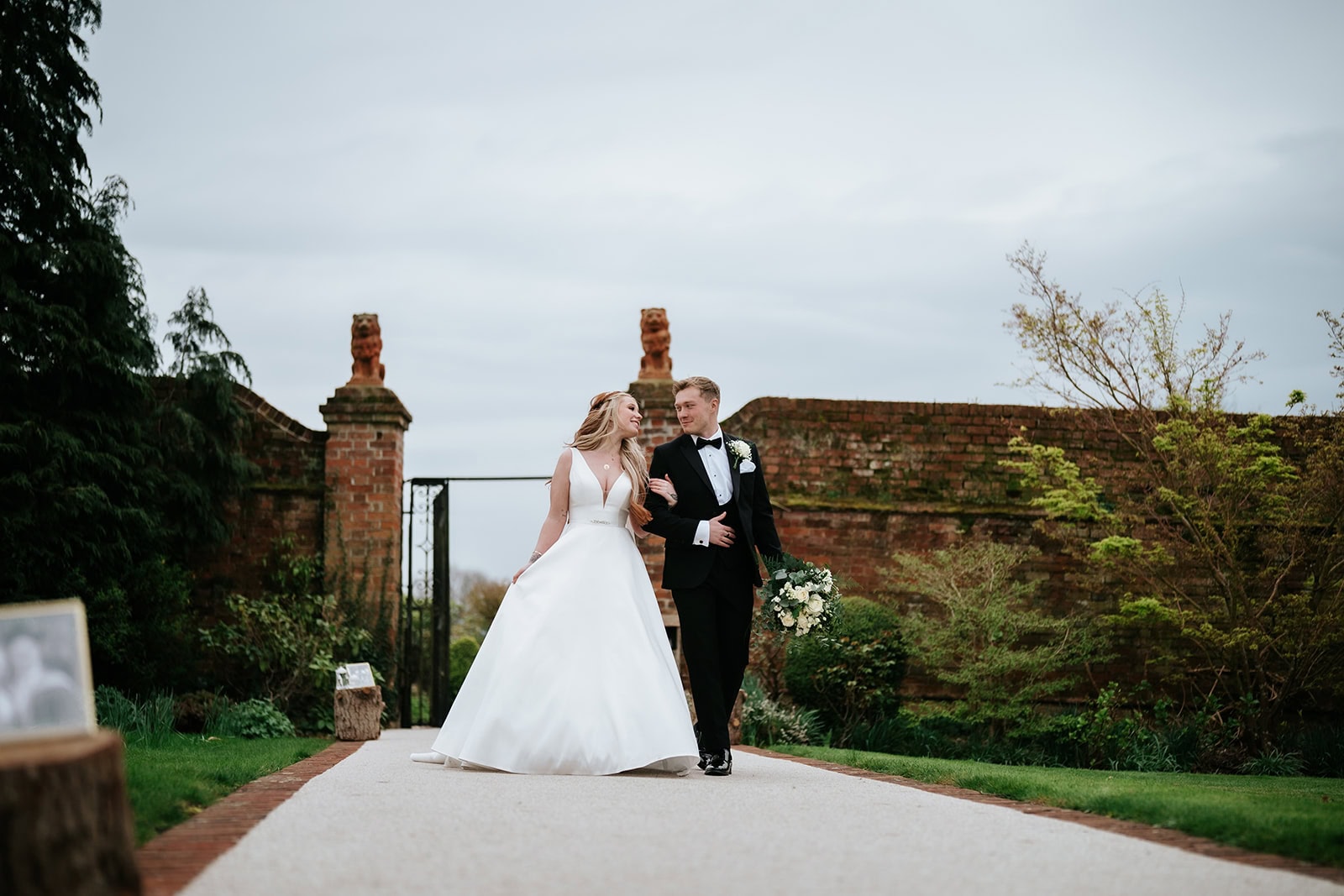
Why Almost Everyone Feels Awkward in Front of a Camera
The camera does something strange to people. Even the most confident, funny, warm-hearted couples can suddenly become stiff the moment a lens points in their direction. And it’s not a character flaw — it’s a completely rational response to an unusual situation.
Think about it. In everyday life, nobody stares at you for ten seconds while you stand in a field with your partner. Nobody watches your hands, your posture, the way you tilt your head. The moment someone does — even someone you trust completely — a part of your brain switches on that says perform.
And the moment you try to perform, you stop being yourself.
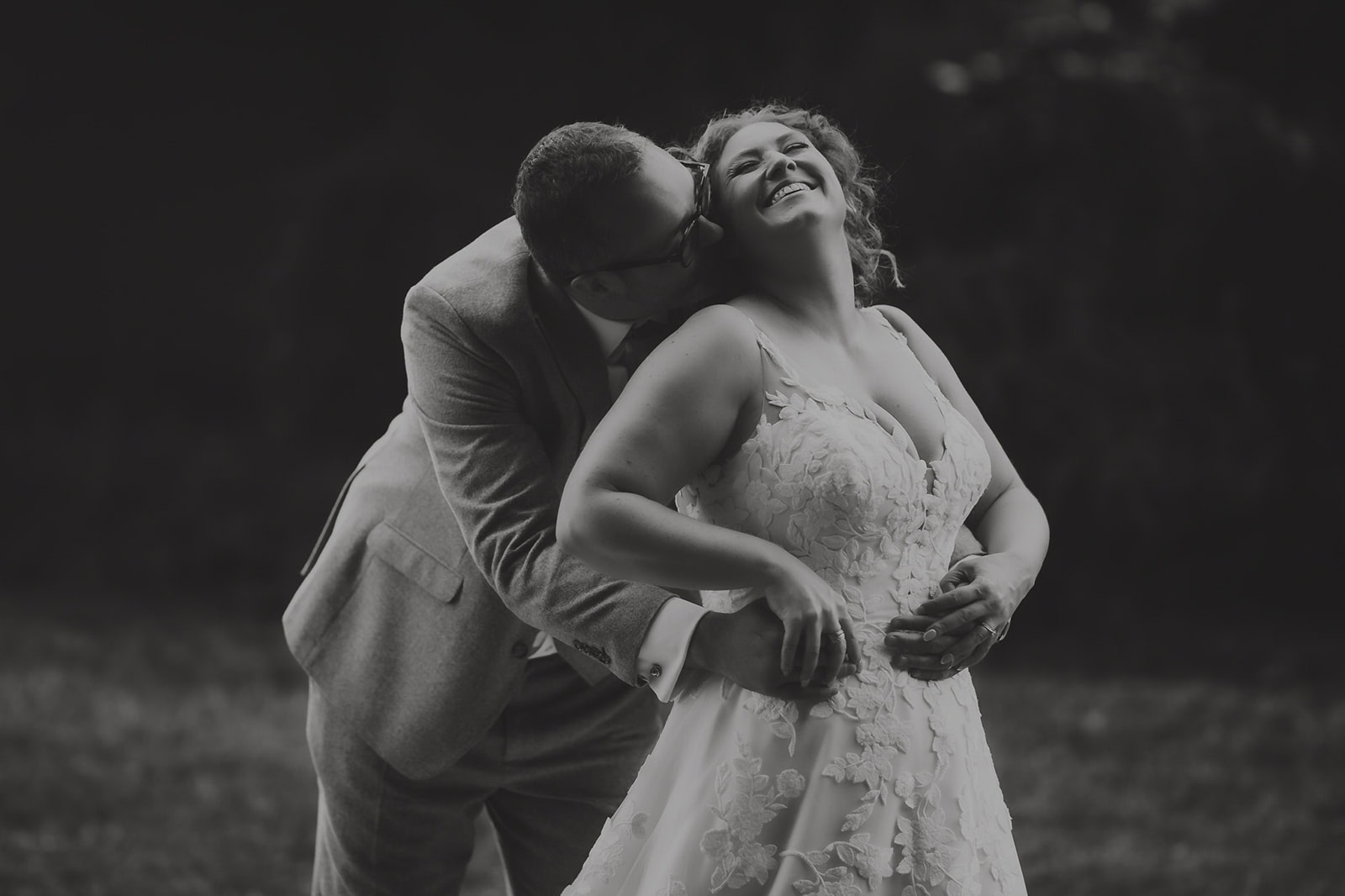
That’s the core of it. Awkwardness in front of the camera isn’t about being unphotogenic or bad at posing. It’s about the performance switch flicking on and your natural self temporarily going offline.
The good news is that switch can be turned off again. And that’s largely my job.
What “Posing” Actually Means (It’s Not What You Think)
When most people hear the word “posing” they imagine something stiff and staged — standing to attention, chin down, eyes to the camera, frozen smile. The kind of thing you’d see in a formal portrait from thirty years ago.
That’s not what I do.
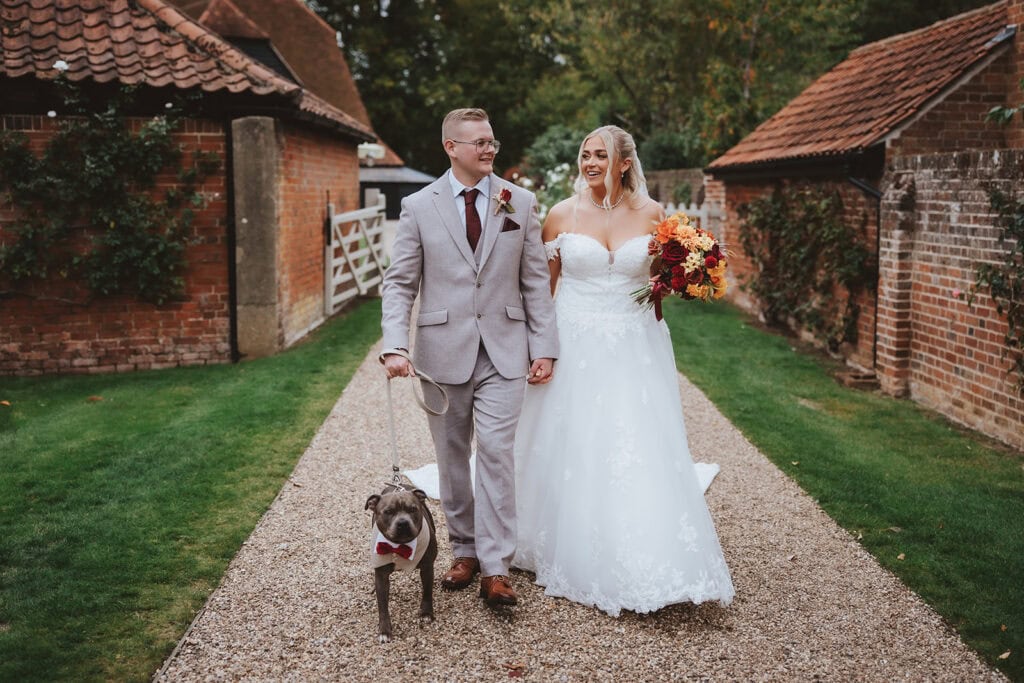
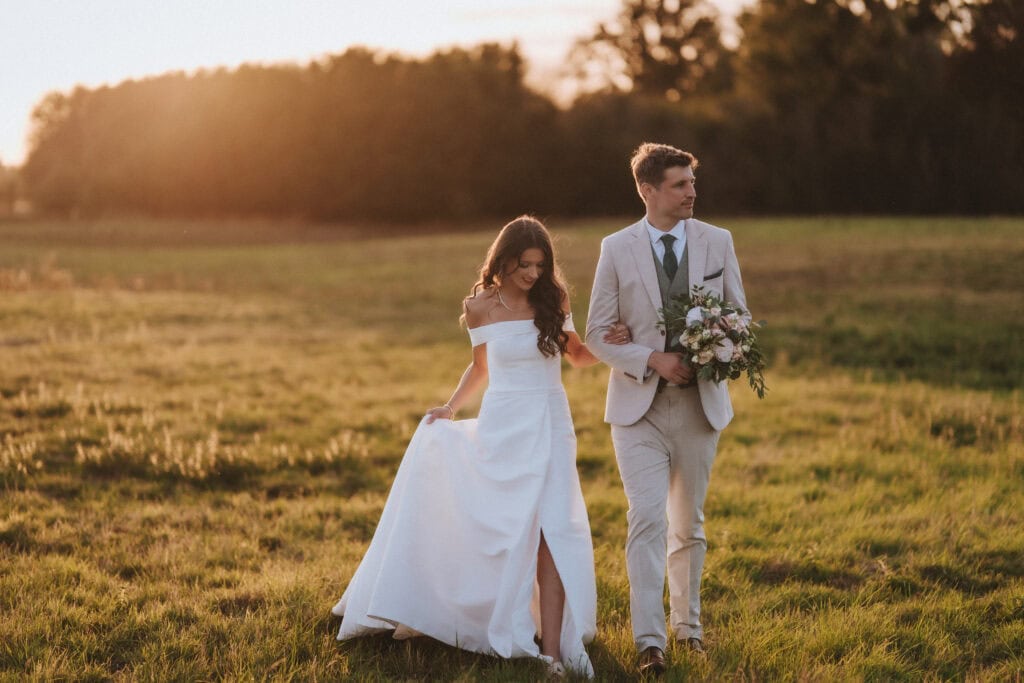
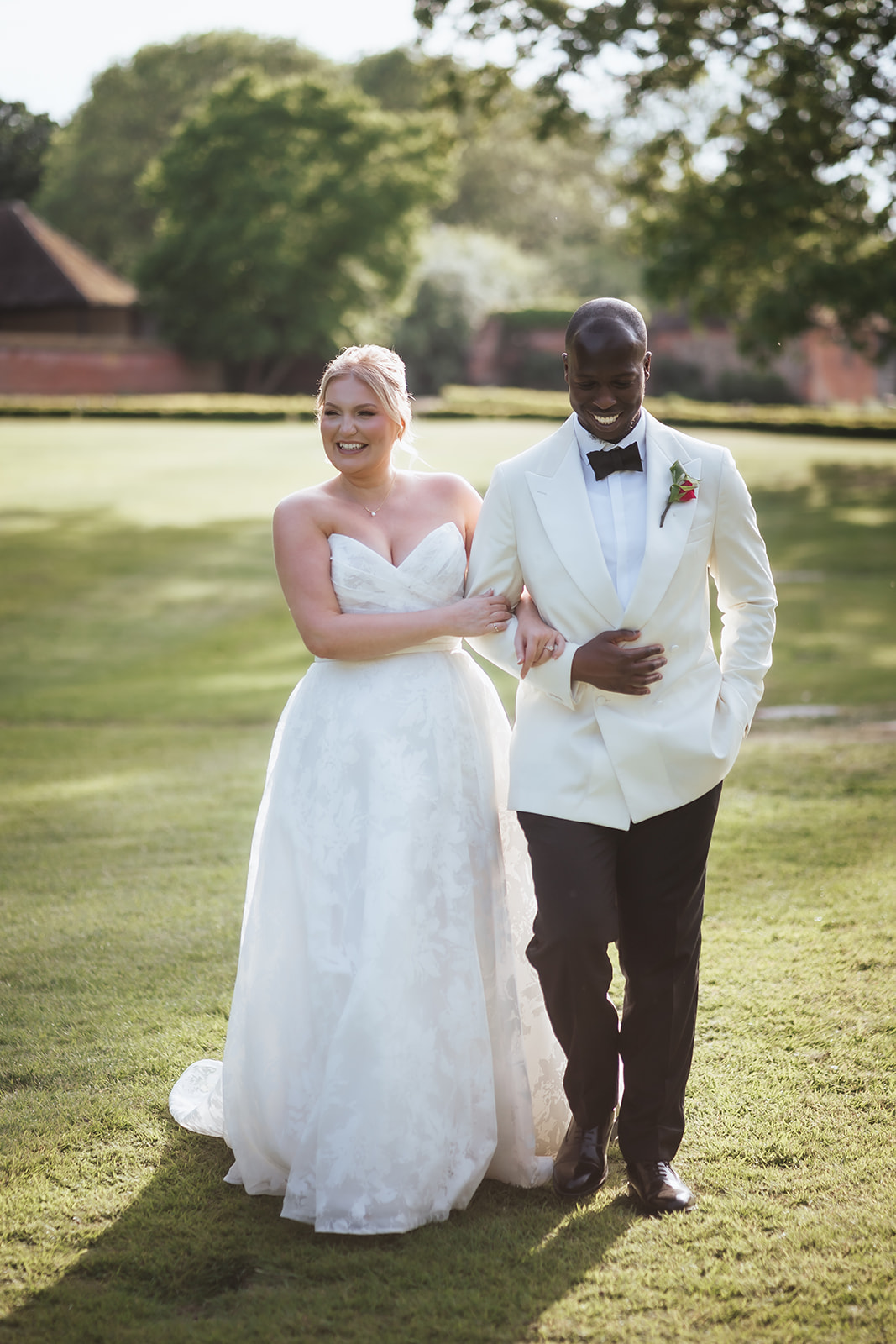
My approach to couple portraits is built on movement, conversation and distraction. I give you things to do rather than positions to hold. Walk towards me. Whisper something that made you laugh this week. Look at each other the way you look at each other when nobody’s watching. Those are directions — not poses.
The images that result from those directions look completely different to anything you’d produce by standing still and being told where to put your arms. They look like you. They have life in them.
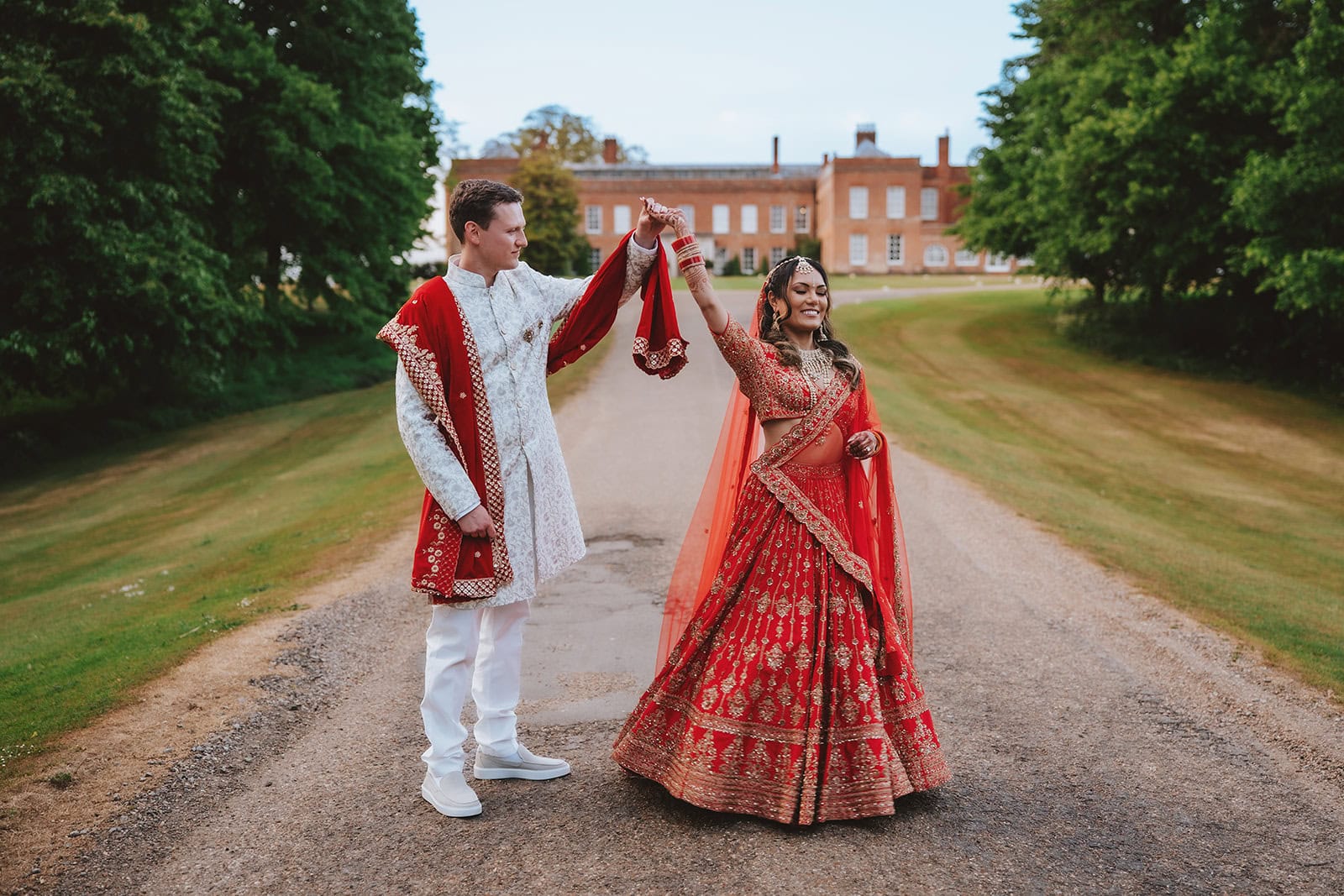
That said, there are moments where I’ll offer a little more specific guidance — a hand placement, a suggestion to lean in slightly, a prompt to rest your head on a shoulder. These aren’t rigid instructions. They’re more like gentle nudges that help create a frame around a natural moment.
The key difference between posing and directing is this: posing asks you to hold a shape. Directing asks you to have an experience — and then captures what happens.
The First Five Minutes Are Always the Hardest
Here’s something I tell every couple before we start: the first five minutes of your couple portraits will feel awkward. Not because anything is wrong. Not because you’re doing it badly. Just because it takes a few minutes for the performance switch to turn off and for you to stop thinking about what you look like.
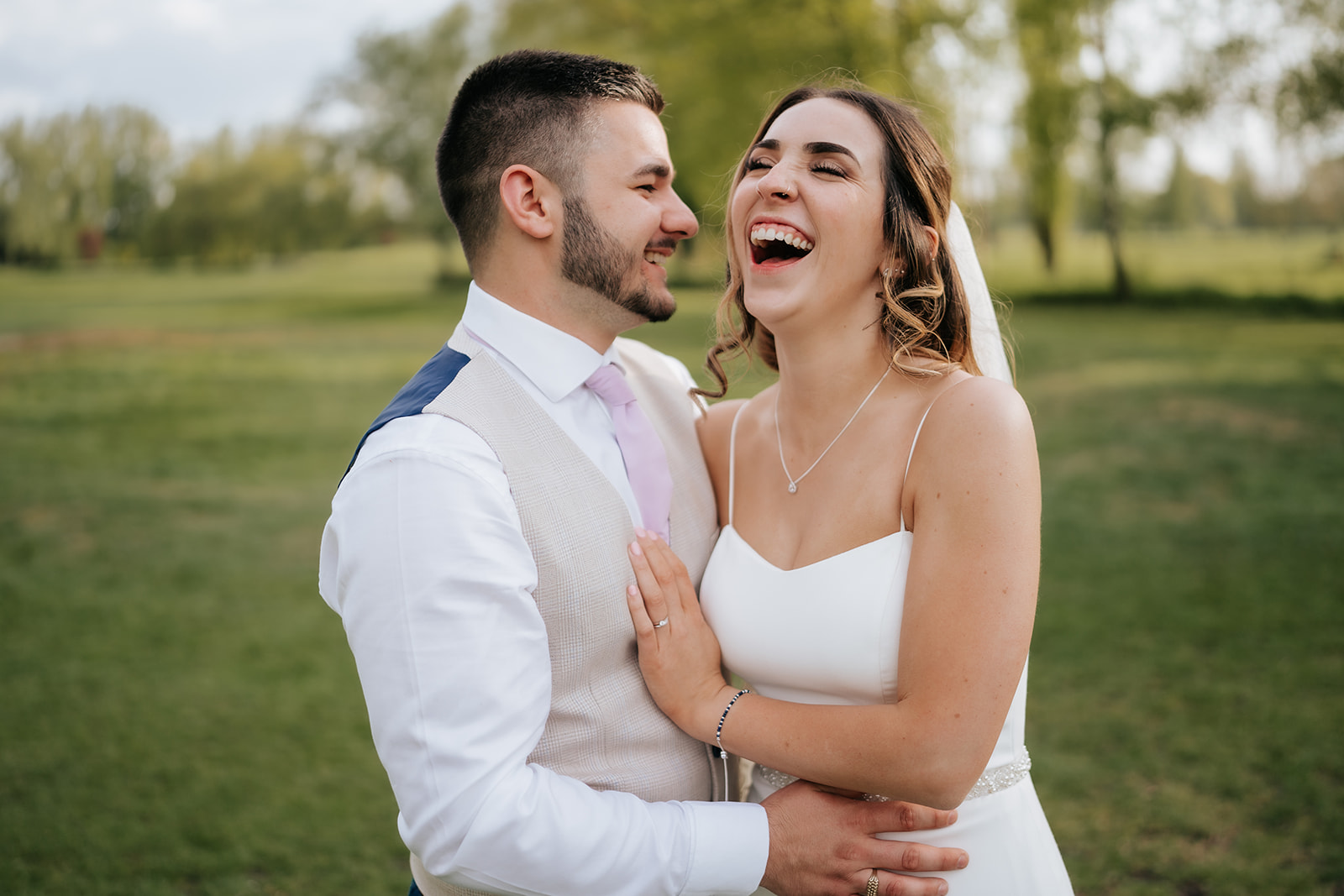
I’ve shot hundreds of weddings. I’ve never had a couple who stayed stiff the whole way through. Not one. By the time we’ve been walking and talking for five minutes, something relaxes. A laugh happens. One of you makes a comment. The other responds. And suddenly I’ve got the shot.
So if your portraits start with you feeling a little wooden and unsure, please know that’s completely expected. You don’t need to fix it. You just need to give it a few minutes.
How I Help You Feel Like Yourself
Over the years I’ve developed a few things that consistently help couples relax during portraits. Here’s what you can expect if you book with me.
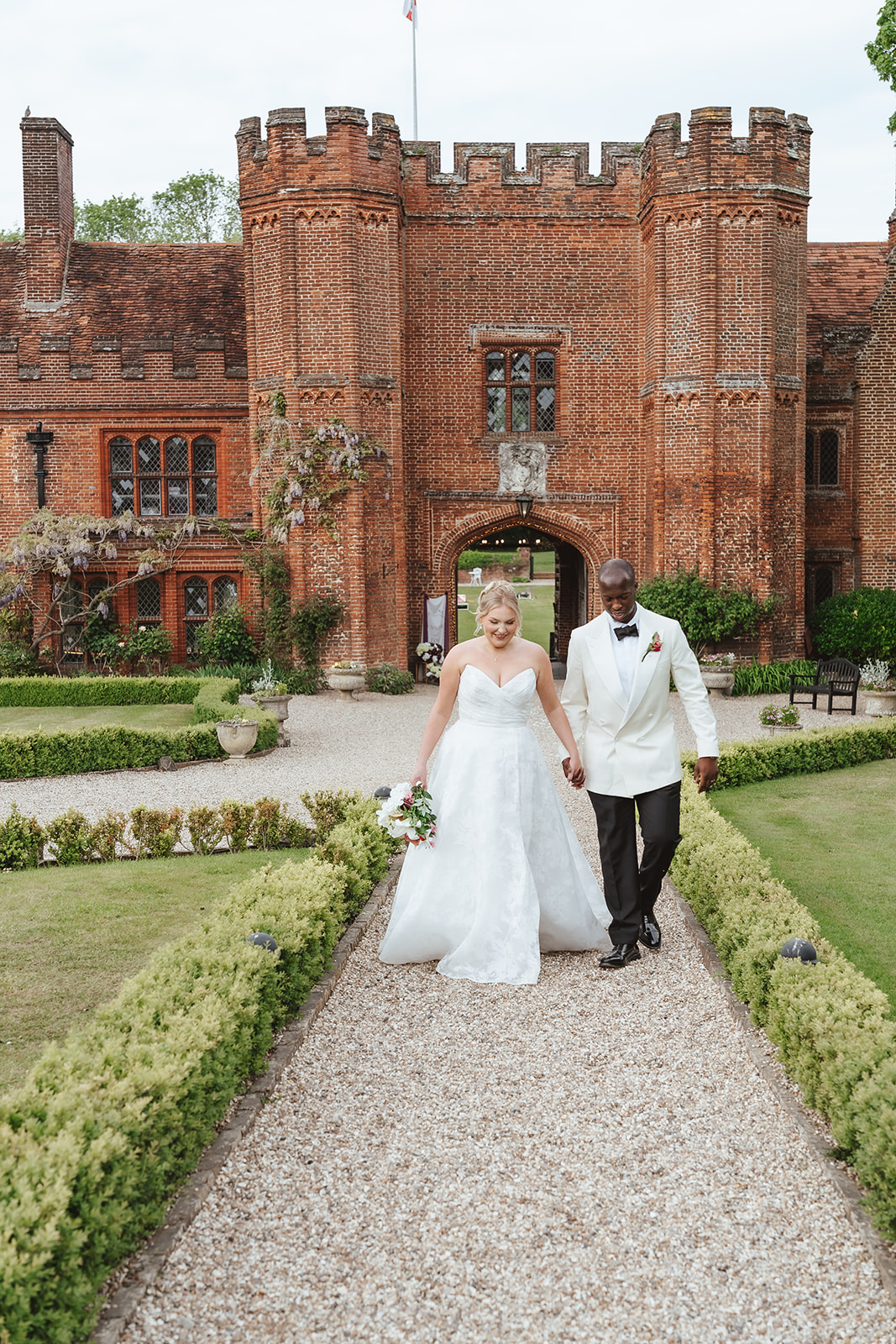
I’ll talk to you the whole time. Not instructions — actual conversation. About your day, about the venue, about the couple you’re both looking forward to seeing at the evening reception. The camera becomes background noise.
I won’t make it feel like a photo shoot. We’ll go for a walk. We’ll find some nice light. I’ll suggest we look at something, or move towards something, or just stand here for a second. It feels more like a stroll with a friend than a formal session.
I won’t show you every photo as we go. This might surprise you, but showing couples images mid-shoot can actually make things worse — suddenly you’re analysing your own face and adjusting your posture, which is the opposite of what we want. I’ll share a few when the time is right, but the focus stays on the experience, not the output.
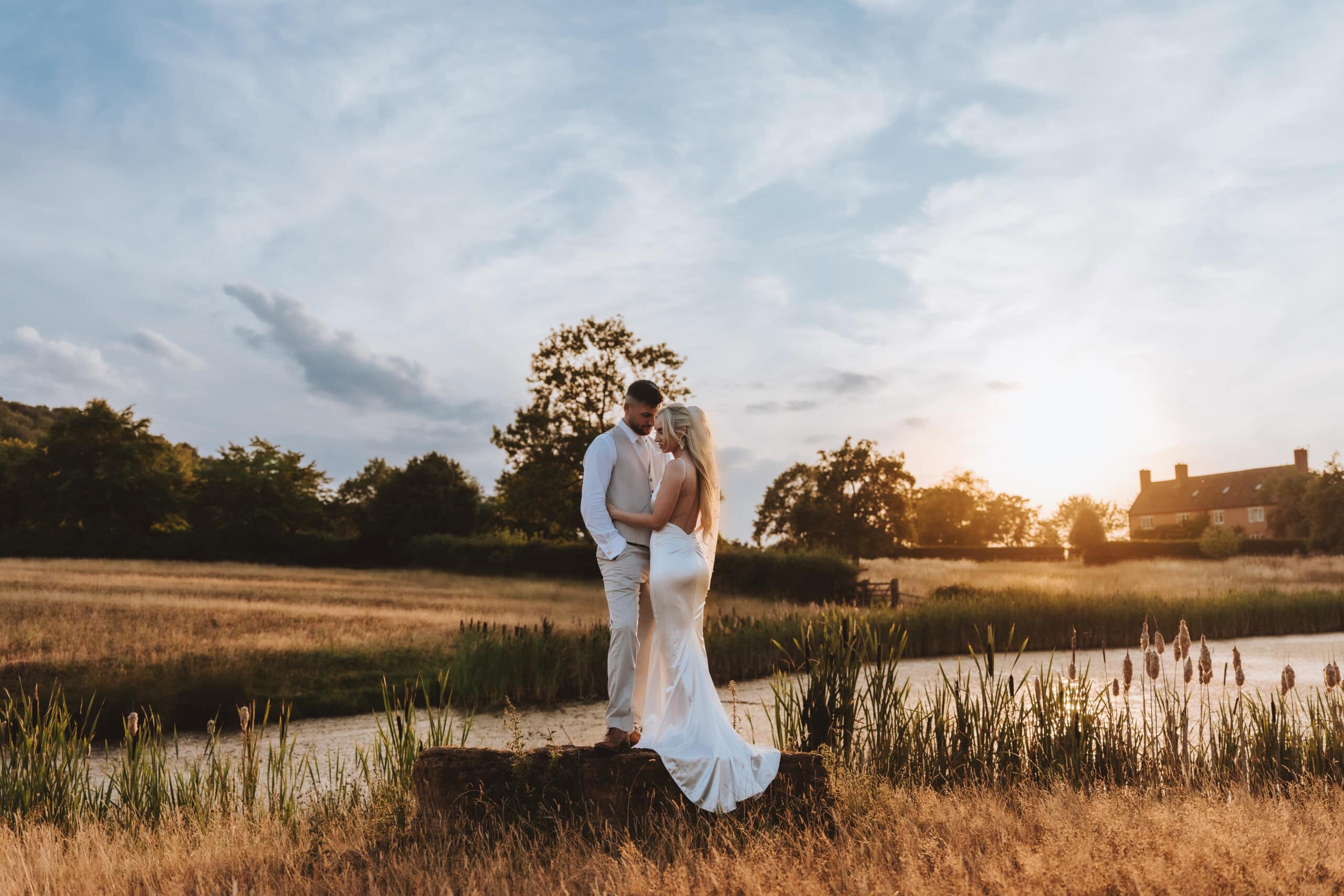
I’ll work with your natural dynamic. Some couples are tactile and affectionate. Others communicate through humour and banter. Some are quietly intimate. I adapt to what you actually are together, rather than trying to direct you into something you’re not.
A Note on “What to Do With Your Hands”
This is genuinely one of the most common things couples worry about. And I completely understand why — hands are weird. They hang there. They don’t know what they’re supposed to be doing. In everyday life you don’t think about your hands at all, and then the moment someone points a camera at you they suddenly become the most conspicuous things in the world.
My practical answer: hold something. Hold each other. Walk holding hands. Put a hand in a pocket. Rest a hand on a shoulder.
My deeper answer: when you stop thinking about your hands and start thinking about the person next to you, your hands sort themselves out. Every single time.
The couples whose hands look most natural in photos are the ones who weren’t thinking about their hands at all. They were looking at each other.
What if One of Us is Much More Camera-Shy Than the Other?
This is really common too. One partner is relatively relaxed, the other is dreading it. It can create a strange dynamic where the relaxed one feels guilty for being fine, and the camera-shy one feels pressure not to “ruin” the photos.
A couple of things worth knowing.
First, camera shyness is almost always more internal than visible. The person who feels like they’re visibly stiff and awful often looks completely fine in the photos. The feeling of awkwardness doesn’t always translate to the image.
Second, I’m very used to working with mixed-confidence couples. Part of what I do is subtly direct the attention — and the dynamic — so that the camera-shy partner gets a chance to relax without feeling like they’re the focus. Usually what helps most is giving them something to do that’s directed towards their partner rather than towards the camera. Look at them, not the lens. That simple shift changes everything.
Pre-Wedding Sessions: The Secret Weapon
If camera anxiety is something you’re genuinely worried about, the single best thing you can do is book a pre-wedding session.
A pre-wedding session (sometimes called an engagement shoot) is an hour together before your wedding day with no pressure, no schedule and no wedding guests watching. It’s just the two of you and me, exploring a location, getting used to being photographed together.
By the time your wedding day arrives, you’ll have been through the whole process once already. You’ll know what to expect. You’ll know how I work. And — most importantly — you’ll know that you can do it, because you already have.
The difference in body language between couples who’ve done a pre-wedding session and those who haven’t is genuinely significant. It’s one of the best investments you can make in your wedding photography.
You can find out more about pre-wedding sessions on my Investment page.
The Truth About “Unphotogenic”
I want to finish with this, because it comes up a lot.
People say they’re unphotogenic as though it’s a fixed, permanent fact about themselves — like being left-handed or having blue eyes. It’s not. “Unphotogenic” is almost always the result of either the wrong photographer, the wrong environment, or the wrong approach — not something inherent to the person in front of the camera.
What “unphotogenic” actually means, most of the time, is: “Every time someone has photographed me, I felt self-conscious and on show, and that feeling showed up in the image.”
My job is to create a situation where that feeling doesn’t happen. Or at least, where it fades quickly. I do that through conversation, movement, patience and a genuine interest in documenting who you actually are rather than who you think you should look like.
Nobody has ever left a portrait session with me still believing they were unphotogenic. Not because I’m magic — but because the conditions that produce that feeling are very easy to change, if you know what you’re doing.
Ready to Find Out What Your Photos Can Look Like?
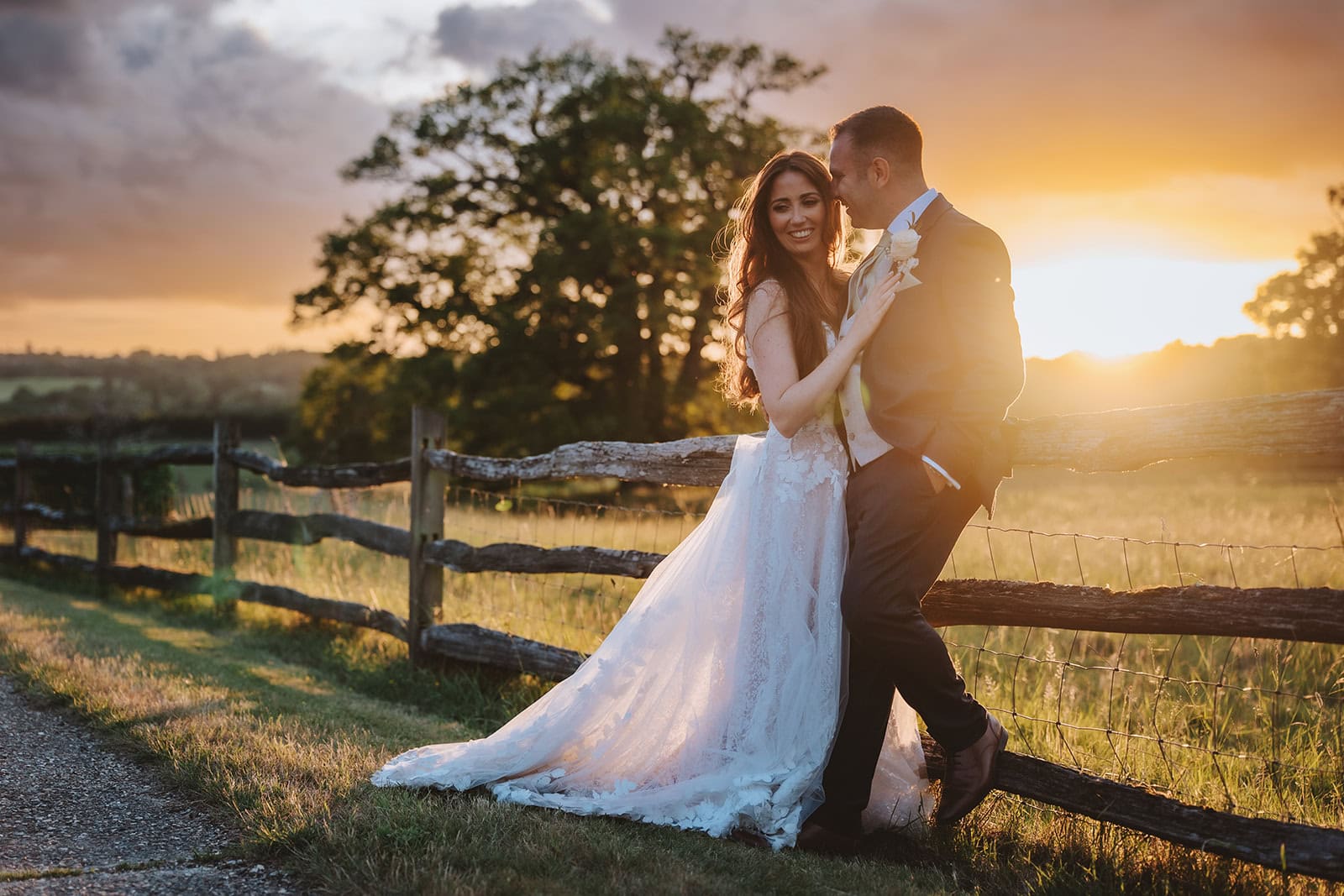
If you’re planning your wedding and you’d love photography that actually looks like you — relaxed, genuine and alive — I’d love to hear from you.
I photograph weddings across Essex, London and the UK, and I only take on a small number of couples each year to make sure every wedding gets my full attention.
Tel is the photographer behind Lily & White Photography, based in Essex. He specialises in editorial and documentary wedding photography for couples who value authenticity over perfection.